

What Is the Viking Trail?
The Viking Trail connects Ireland's five Norse-founded cities: Dublin (841 AD), Waterford (914 AD), Limerick (c. 922 AD), Wexford, and Cork. Before the Vikings, Ireland had no towns. The Norse introduced urban life, coinage (Dublin minted coins from 997 AD), and international trade. The Hiberno-Norse culture that developed blended Scandinavian and Celtic artistic traditions, influencing Irish art and jewelry to the present day.
The Viking Trail is not a single marked road. It is a route connecting the five cities that Vikings founded in Ireland between the 9th and 10th centuries: Dublin, Waterford, Wexford, Cork, and Limerick. Each of these cities began as a Norse longphort (a fortified ship camp) and grew into Ireland's first urban centers.
Before the Vikings arrived, Ireland had no towns. The population lived in scattered rural settlements, monastic communities, and ring forts. The Norse changed that. They established permanent trading posts on rivers and harbors, introduced coinage (Dublin minted its first coins in 997 AD), and connected Ireland to commercial networks stretching from Scandinavia to the Mediterranean.
The first recorded Viking raid on Ireland came in 795 AD, targeting coastal monasteries. For decades, the attacks were seasonal: arrive in summer, loot, leave. But around 841 AD, a fleet of Norse longships sailed up the River Liffey and established a permanent camp at a place called Dubhlinn ("Black Pool"), named for a tidal pool at the confluence of the Liffey and the River Poddle. That camp became Dublin.
What followed was 300 years of interaction between Norse and Gaelic cultures. Conflict, trade, intermarriage, and eventually fusion. The Hiberno-Norse tradition that emerged produced a distinctive art style blending Scandinavian animal interlace with Celtic knotwork, visible today in Irish jewelry, stone carving, and metalwork. For the full story, see our Celtic vs Viking guide.
The Stops Along the Viking Trail
The trail runs in a rough loop from Dublin south along the coast. Driving times are between consecutive stops.
H3: 1. Dublin: Where the Vikings Built Ireland's Capital
Dublin's Viking story centers on three sites. Dublinia, a museum in the heart of the medieval city near Christ Church Cathedral, offers an immersive walk through Viking-age Dublin, including reconstructed houses and artifacts from the city's Norse period.
Wood Quay, beside the River Liffey, is the site of the largest Viking settlement excavation in Dublin. In the 1970s, archaeologists uncovered an entire Norse neighborhood before the construction of civic offices. The excavation recovered thousands of artifacts, from leather shoes to iron tools, revealing the daily life of Viking Dublin.
The National Museum of Ireland on Kildare Street holds the most significant Viking-era artifacts found in Ireland, including weapons, jewelry, and trade goods that illustrate Dublin's role as an international trading hub.
Starting point for the trail.
H3: 2. Wexford
Wexford began as a Norse coastal settlement, and its name comes from the Old Norse "Veisafjordr" (inlet of the mud flats). The narrow medieval streets of the town center preserve the layout of the original Norse settlement. The Wexford Heritage Tower and the Westgate, one of the original medieval gates, survive from the town's walled period.
Drive from Dublin: Approximately 1 hour 45 minutes (150 km).
H3: 3. Waterford Viking Triangle
Waterford is Ireland's oldest city, founded by Viking settlers in 914 AD. The Viking Triangle is the historic core, named for the triangular shape of the original Norse settlement. Reginald's Tower, at the apex of the triangle, is the oldest civic building in Ireland, in continuous use for over 800 years. It now houses the Waterford Viking Museum with artifacts including finds from the Woodstown archaeological site (a major Norse settlement discovered in 2003).
The Waterford Treasures museums, spread across the Viking Triangle, hold collections spanning from the Viking age through the medieval and Georgian periods, making Waterford the most complete museum complex documenting Irish urban history.
Drive from Wexford: Approximately 1 hour (65 km).
H3: 4. Cork
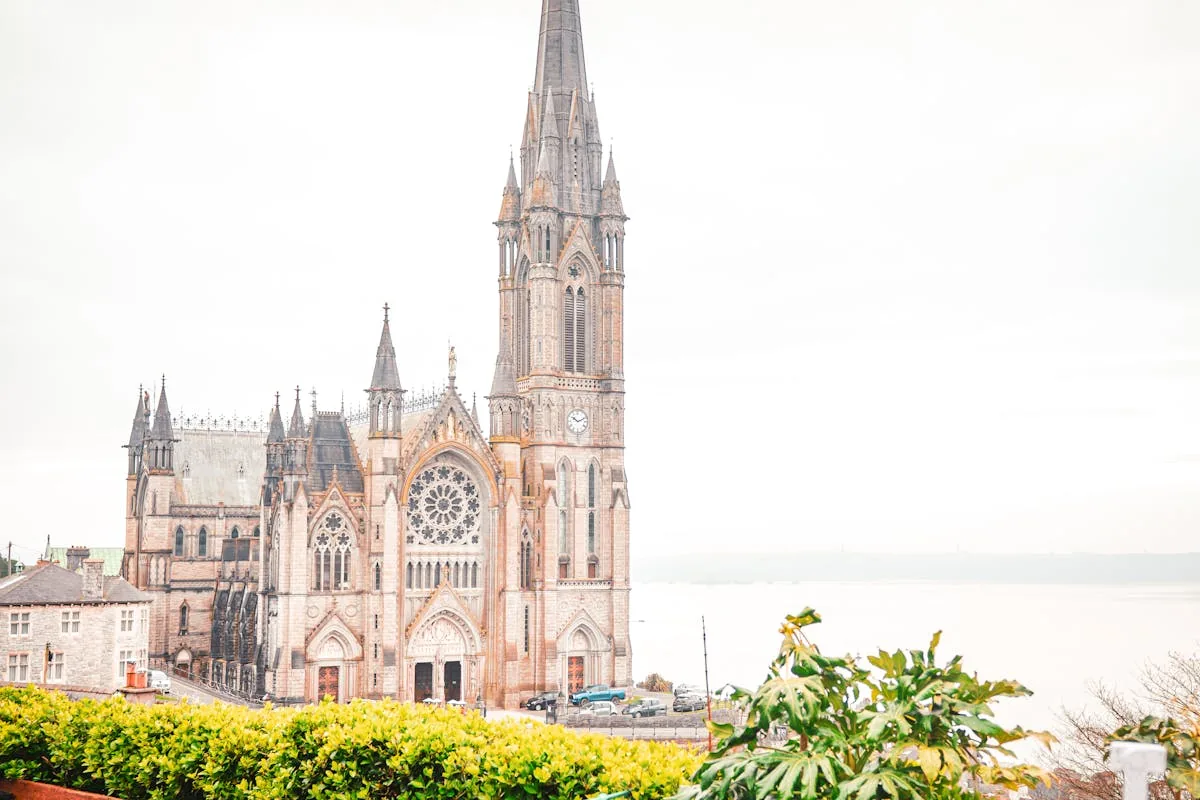
Cork (from the Irish "Corcaigh," meaning marsh) was established as a Norse settlement in the early 10th century on an island in the River Lee. The marshy terrain that gave the city its name was the same feature that attracted the Vikings: a sheltered harbor with river access to the interior. The Cork Public Museum in Fitzgerald's Park holds local Viking-era finds, and the medieval core of the city still reflects the island settlement the Norse established.
Drive from Waterford: Approximately 1 hour 30 minutes (130 km).
H3: 5. Limerick
Limerick was founded as a Viking walled city around 922 AD on King's Island in the River Shannon. The location was strategic: the Shannon gave Norse longships access deep into the Irish midlands. King John's Castle (built 1200-1210 by the Normans, on the site of earlier Norse fortifications) dominates King's Island today. The Treaty Stone, a limestone block on Clancy Strand near Thomond Bridge, is associated with the Treaty of Limerick (1691) and marks the historical continuity of this Viking-founded river city.
The Hunt Museum, housed in the 18th-century Custom House on Rutland Street, holds one of Ireland's finest private collections, including Bronze Age, medieval, and early modern artifacts.
Drive from Cork: Approximately 1 hour 30 minutes (100 km).
H3: 6. Clontarf, Dublin (The Battle)
The Battle of Clontarf on Good Friday, 1014 AD, is traditionally seen as the end of Viking political dominance in Ireland. Brian Boru, High King of Ireland, fought a coalition of Norse and Leinster forces. Brian's army won, but Brian himself was killed. The reality is more complex than the legend. Both sides included Norse and Irish fighters, and the battle was as much an Irish dynastic conflict as it was a clash of cultures. But Clontarf marked the moment when Norse political autonomy in Ireland ended, even as Hiberno-Norse culture continued to flourish.
Drive from Limerick back to Dublin (Clontarf): Approximately 2 hours 30 minutes (200 km).
Visiting the Viking Trail: What You Need to Know
The Viking Trail is a driving loop of approximately 645 km connecting Dublin, Wexford, Waterford, Cork, and Limerick. All five cities were founded by Norse settlers between 841 AD and 922 AD. The trail can be driven in 3-5 days. Key museums include Dublinia (Dublin), Reginald's Tower (Waterford), and King John's Castle (Limerick).
The Viking Trail connects five cities, all accessible by major roads.
| Detail | Information |
|---|---|
| Total driving distance | Approximately 645 km (full loop, Dublin to Limerick and back) |
| Recommended duration | 3-5 days |
| Starting point | Dublin (Dublinia and National Museum) |
| Best season | Year-round. Museums are indoors. |
| Key museums | Dublinia (Dublin), National Museum of Ireland (Dublin), Reginald's Tower (Waterford), King John's Castle (Limerick) |
| Booking | Most museums are walk-in. Dublinia and King John's Castle can get busy in peak summer. |
Viking Heritage and Irish Jewelry
The Viking influence on Irish art is permanent.
When Norse and Gaelic cultures merged in the 9th and 10th centuries, they produced the Hiberno-Norse style that transformed Irish metalwork. The interlace knotwork on Celtic rings and pendants draws from both traditions. Norse Urnes-style animal patterns blended with Celtic spirals and geometric designs to create the ornamental language visible in contemporary Irish jewelry.
The Vikings also brought new metalworking techniques to Ireland. Norse smiths introduced granulation, filigree refinement, and new alloy compositions that Irish craftspeople adopted and transformed. The Tara Brooch, likely produced in a workshop influenced by both traditions, is considered one of the finest examples of insular metalwork ever created.
Dublin's role as a Norse trading center is also the reason why Dublin Castle later became the center of Irish hallmarking. The administrative and commercial infrastructure the Vikings established persisted through the Norman period and into the modern era.
For the full story, see our Celtic vs Viking guide.
Explore Viking-Inspired Celtic Jewelry →
Explore More Heritage Trails
- Ireland's Ancient East: The broader heritage route through 17 eastern counties
- Causeway Coastal Route: Rathlin Island, site of one of the first Viking raids (795 AD)
- Wild Atlantic Way: The western coast the Vikings raided and eventually settled
- Book of Kells Journey: The manuscript the monks saved from Viking raiders