
Irish Recipes: What Ireland Actually Cooks

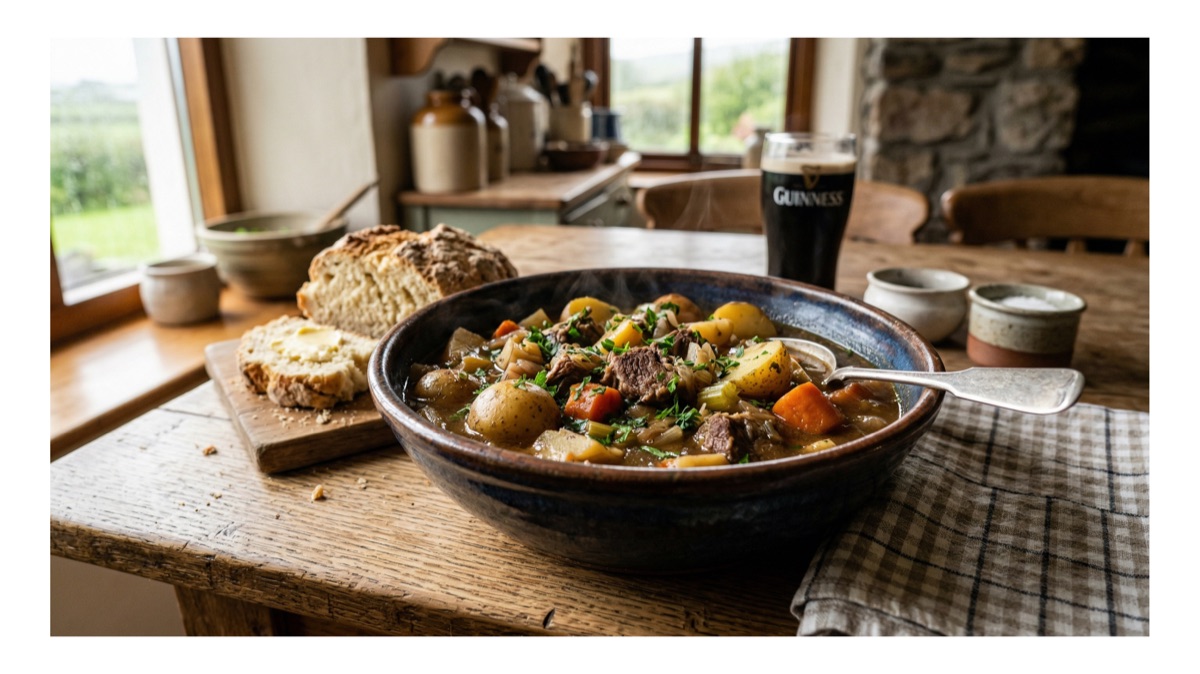
Traditional Irish stew in a bowl

Most of what passes for Irish food abroad is corned beef and green beer. Neither is Irish. Real Irish cooking builds on potatoes, dairy, mutton, oats, and cabbage. Below are six dishes we cover in full, each with history, US-friendly measurements, and honest ingredients you can find in a decent supermarket.

Six recipes on this site

  • Irish stew — mutton or lamb, potatoes, onions; we also cover Guinness beef and lamb with roots.
  • Irish soda bread — four ingredients, no yeast; brown bread and Ulster farls inside.
  • Irish coffee — Foynes origin story, cream float, whiskey picks.
  • Colcannon — mash with cabbage or kale; Halloween charms and champ comparison.
  • Boxty — Midlands potato pancake; griddle version plus boiled “cake.”
  • Full Irish breakfast — fry-up assembly, black and white pudding, Ulster fry extras.

Drinks and pub context

For the glass beside the plate, see Irish whiskey and Guinness and Irish pub culture.

Neolithic field systems in North Mayo, including the Céide Fields visitor site (OPW), show how early farming shaped the Irish landscape. That long agrarian backbone is why so many Irish dishes are simple, filling, and built from what grew here.

Keep exploring

The Irish Heritage Quiz asks seven questions about your connection to Irish symbols and traditions — try it after reading, or keep exploring the guides.

Frequently asked questions

Is corned beef and cabbage Irish?

It is an Irish-American tradition, not a classic dish in Ireland. Our pages focus on what people actually cook on the island: stew, soda bread, boxty, colcannon, and the fry-up.

What should I cook first?

Soda bread is the fastest win (under an hour). Stew is the deepest taste of traditional one-pot cooking if you have three hours.

Where is Irish coffee from?

Chef Joe Sheridan at Foynes flying-boat base in County Limerick, 1940s. Our Irish coffee recipe covers the original pour and the Buena Vista story.