

What makes Connemara unique in Irish heritage?
Connemara National Park was established in 1980 and now covers over 2,000 hectares of mountain, bog, and grassland. The park surrounds the southern reaches of the Twelve Bens, including peaks like Benbaun, Bencullagh, Benbrack, and Muckanaght. Within these lands, history and nature intertwine; the park includes territory once owned by Richard "Humanity Dick" Martin, a founder of the Society for the Prevention of Cruelty to Animals.
Cultural preservation is also evident in the maintenance of heritage breeds, such as the Connemara pony, which is a vital part of the local identity. The region is a Gaeltacht area, meaning the Irish language (Gaeilge) is a living part of the community. This linguistic heritage, combined with deep song and storied inlets, makes the area a unique repository of the Irish soul.
Where does Connemara marble come from?
This green gemstone is found exclusively in the West of Ireland, with a primary quarry located in Lissoughter, Recess, County Galway. Extracted from the earth and transported for polishing, the marble is a central part of the region's stone-working legacy and remains a rare symbol of the Irish landscape.
The quarrying tradition is managed by family-run businesses that have operated in the region for decades, such as the Walsh family business which began in 1945. The marble itself is a lush, green gemstone that exists only in this specific part of the world. Geological records indicate this marble is approximately 900 million years old.
The stone is carefully extracted from the Lissoughter quarry and then moved to facilities in Dublin for final processing and polishing. This material is used to create a wide variety of items, including jewelry like pendants and rings, as well as religious gifts such as rosary beads. The marble is a primary feature in Celtic-themed designs, often paired with traditional symbols like the Claddagh or the Trinity Knot. For a deeper look at the cultural significance of this stone, explore our Connemara marble meaning guide.
What is Kylemore Abbey and why is it important?
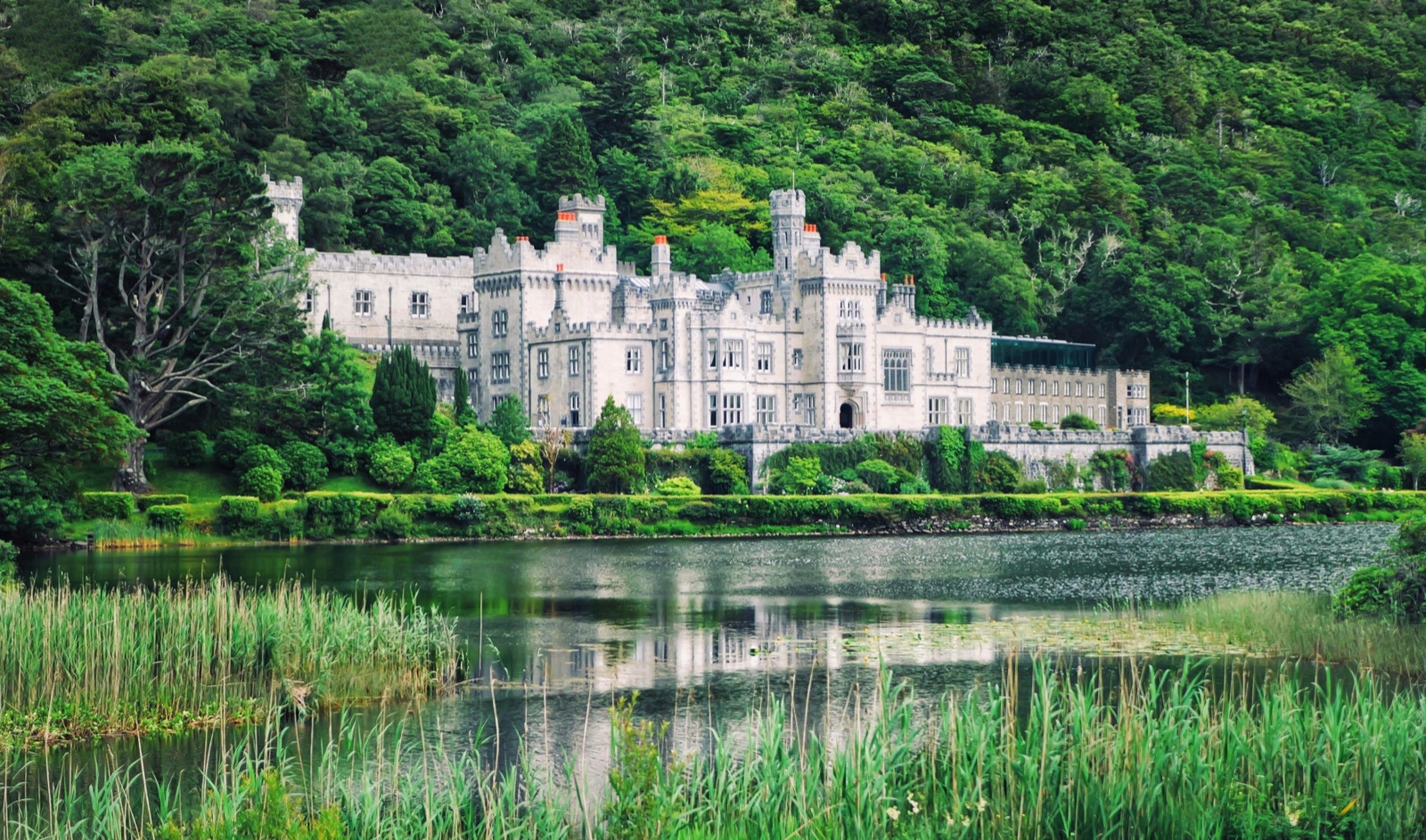
Kylemore Abbey is a 19th-century estate in County Galway that serves as a center for spirituality and education. Built in 1868 as a Victorian castle for Mitchell Henry, it became a Benedictine monastery in 1920. Today, it is famous for its neo-Gothic church and extensive Victorian Walled Garden.
The history of the abbey is a saga of romance, innovation, and perseverance. Mitchell Henry purchased a hunting lodge in the Kylemore valley in the early 1850s and transformed it into an elaborate castle as a love token for his wife, Margaret. The Henry family were key figures in Irish politics and social reform during their 35-year residence. Later, the estate was home to the Duke and Duchess of Manchester, who introduced further changes to the castle during their tenure.
The Benedictine Nuns arrived at Kylemore in 1920 after fleeing Brussels as refugees of World War One. They converted the castle into an abbey and established a renowned boarding and day school that operated from 1923 until 2010. The estate is also home to a unique Victorian Walled Garden and a neo-Gothic church, both of which are major heritage attractions. The abbey remains deeply rooted in the local landscape, and the nuns continue to follow the Rule of St. Benedict, welcoming visitors to experience the serenity of the grounds from generation to generation.
How does Connemara connect to Aran Island culture?
Connemara serves as the primary mainland gateway to the Aran Islands, sharing deep linguistic and cultural ties. Ferries depart from the Connemara coast to these Atlantic outposts, where the Irish language remains the first tongue and traditional seafaring practices continue to define the shared identity of the West.
The connection is maintained through frequent travel and tourism. Boat tours and ferry services, such as those operating from Roundstone Bay, facilitate the movement of people and goods between the mainland and the islands. Both regions are integral parts of the Wild Atlantic Way, sharing a rugged coastal environment that has shaped their respective histories.
Cultural icons like the Aran sweater are synonymous with this Atlantic heritage, representing the knitting traditions of the island communities. The patterns of these sweaters are linked to the history of the families who wore them. Explore our Aran Islands guide and Aran sweater meaning guide for more. The linguistic bond is perhaps the strongest tie; both Connemara and the Aran Islands are strongholds for Gaeilge, ensuring that ancient traditions and modern life coexist through a shared ancestral language.
What are the best heritage walks in Connemara?
Connemara offers diverse walking trails ranging from the challenging peaks of the Twelve Bens to the coastal vistas of Sky Road. In Connemara National Park, visitors explore Diamond Hill and various nature trails that showcase the region's unique bogs, grasslands, and panoramic views of the Atlantic landscape.
The most iconic trek is the ascent of Diamond Hill. The park features both an Upper and Lower Diamond Trail, with the summit providing panoramic views of the Twelve Bens and Kylemore Abbey. For those seeking mountain challenges, the Twelve Bens range includes Benbaun, which is the highest peak in County Galway at 725 meters. These mountains dominate the scenery and offer a true wilderness experience.
For more relaxed heritage exploration, the Ellis Wood Nature Trail and the Sruffaunboy Trail provide accessible ways to see local flora and fauna. The Connemara Greenway offers a scenic route for both walkers and cyclists, often used by families for picnics. Another notable heritage route is the Sky Road near Clifden, famous for its coastal views. Visitors can also explore the Connemara Sheep and Wool Trail, which highlights the history of local agriculture and textile production. Whether traversing the flowering bog or climbing flayed rock, these trails allow visitors to engage directly with the region's storied landscape.