

What is Temple Bar?
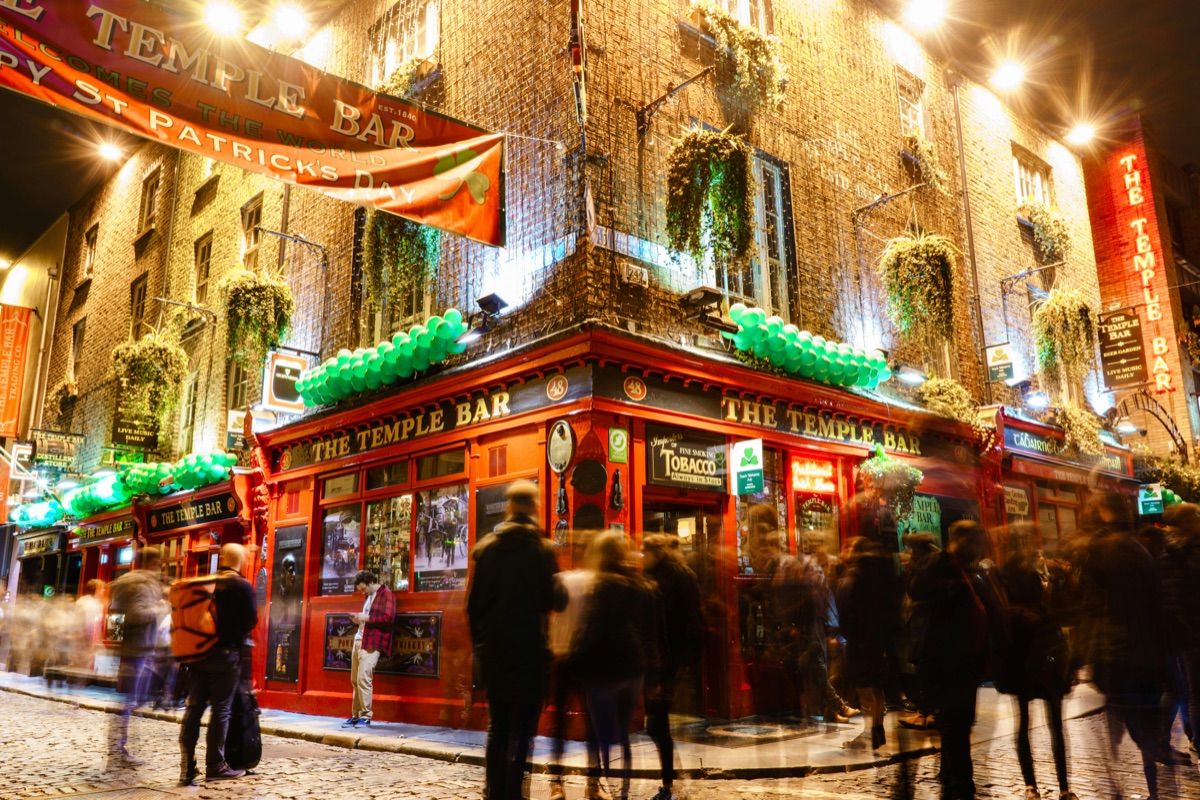
Temple Bar is a compact neighborhood in central Dublin, situated on the south bank of the River Liffey between Dame Street and the waterfront. Covering roughly a dozen cobblestoned streets, it became Ireland's first officially designated cultural quarter in 1991. The district is home to galleries, theaters, traditional pubs, and the famous red-fronted Temple Bar Pub that has become one of the most photographed buildings in Ireland.
The area sits just steps from Dublin Castle, Trinity College, and the Ha'penny Bridge. Its pedestrian lanes — Crown Alley, Merchants Arch, and Cecilia Street — create a walkable network that connects some of the city's most distinctive pubs, restaurants, and cultural spaces. For visitors to Dublin, Temple Bar serves as the social anchor of the city, the place where live music, heritage, and Irish pub culture meet on a single set of cobblestones.
Why is Temple Bar famous?
Temple Bar is famous as Dublin's vibrant cultural and entertainment quarter. Its cobblestone streets, iconic red-fronted Temple Bar Pub, nightly live traditional music, street buskers, and concentration of Irish pubs make it the most recognized neighborhood in Ireland. The area also hosts the Irish Film Institute, Project Arts Centre, and Temple Bar Gallery and Studios.
The fame starts with the iconic pub. The Temple Bar Pub, with its bright red façade and flower-box windows, is one of the most photographed buildings in Ireland. Every night, traditional musicians fill its interior with fiddle, bodhrán, and tin whistle sessions that spill out onto the cobblestones. But the district is far more than a single pub. It is a dense concentration of cultural institutions, galleries, vintage shops, and restaurants that together create the most concentrated slice of Irish urban culture anywhere in the country.
Street buskers perform throughout the lanes, especially on weekends when the pedestrian traffic is heaviest. The energy of Temple Bar is a direct continuation of the tradition that defines Irish pub culture — music, conversation, and a pint shared in good company. This is the Dublin that visitors remember long after they leave.
What is the history of Temple Bar?
Temple Bar takes its name from Sir William Temple, provost of Trinity College from 1609 to 1627, who built a house and gardens in the area. The first recorded use of the name appears on Bernard de Gomme's Map of Dublin from 1673. The name also echoes the Temple Bar district in London. In the 1980s, the area was nearly demolished for a bus station before being saved and designated as a cultural quarter in 1991.
Sir William Temple arrived in Ireland in 1599 as secretary to the Earl of Essex. After the Earl's execution, Temple became provost of Trinity College and established his residence near the River Liffey. The streets that bear his family's name — mirroring London's Fleet Street and Essex Street layout — became a commercial zone that evolved through centuries of trade and transformation.
The area's modern story is one of near-destruction and dramatic rescue. In the 1970s and 1980s, the state transport company CIÉ purchased property across the district with plans to demolish the buildings and construct a central bus terminus with an underground car park. While awaiting construction, CIÉ leased the buildings at low rents. This inadvertently attracted artists, small galleries, vintage shops, and a bohemian community that transformed the character of the streets.
Following sustained protests from residents and heritage organizations like An Taisce, the bus station project was cancelled. In 1991, the Irish government designated Temple Bar as Dublin's cultural quarter and established Temple Bar Properties to oversee its regeneration. Throughout the mid-1990s, the area underwent extensive restoration — historic buildings were renovated and streets were cobbled. By 1996, Temple Bar had become one of Europe's most successful urban renewal stories and a major tourist destination.
What are the best pubs in Temple Bar?
The best pubs in Temple Bar include The Temple Bar Pub for its iconic red façade and nightly trad sessions, Oliver St. John Gogarty's for rooftop music, The Norseman for a quieter atmosphere, The Quays Bar for ornate Victorian interiors, The Porterhouse for craft beer, and Merchants Arch Bar near the Ha'penny Bridge. Each hosts live music most nights.
The Temple Bar Pub
The most photographed pub in Ireland. Its bright red exterior on Temple Bar Street is an international symbol of Dublin. Inside, traditional musicians play every night, and the whiskey collection runs to hundreds of bottles. This is the quintessential Irish pub experience — see our Guinness and pub culture guide for the deeper story of what makes an Irish pub.
Oliver St. John Gogarty's
Named after the poet, surgeon, and friend of James Joyce, Gogarty's runs trad sessions from early afternoon through late night. The rooftop terrace offers one of the best views in the district. With 720 monthly searches, it is one of the most sought-after pub experiences in Dublin.
The Norseman
Tucked on the corner of Essex Street, The Norseman offers a more relaxed atmosphere than its busier neighbors. It's a favorite among locals looking for a quieter pint in the heart of the district.
The Quays Bar
The Quays stands out for its ornate Victorian interior and church-like architecture. Dark mahogany and stained glass create an atmosphere that feels centuries old, even though the pub was renovated in the 1990s.
Merchants Arch Bar
Located at the entrance to the famous Merchants Arch — the pedestrian lane that leads from the Ha'penny Bridge into the heart of Temple Bar — this pub occupies one of the most atmospheric positions in Dublin.
The Porterhouse
Dublin's first brewpub, The Porterhouse brews its own craft beers on-site. Spread across multiple floors, it offers an alternative to the stout-and-whiskey standard that dominates the district.
Bad Bobs
A more rowdy, late-night option on Essex Street. Bad Bobs draws a younger crowd with live bands, DJs, and an energetic atmosphere that extends well past midnight.
What should you eat and drink in Temple Bar?
Temple Bar offers everything from traditional Irish stew and seafood chowder to modern international restaurants. The Shack Restaurant serves hearty meals in a rustic setting. Thunder Road Cafe is a rapidly growing favorite. For drinks, expect a pint of Guinness or a dram of Irish whiskey at every corner — but prices here run €1–€2 higher than other Dublin neighborhoods.
For traditional Irish food, start with an authentic Irish stew — lamb, root vegetables, and herbs slow-simmered to perfection. Many pubs in the district serve their own versions alongside Dublin coddle, a local specialty of sausages, bacon, and potatoes. Pair either with a dense slice of Irish soda bread.
The drinks story is inseparable from the setting. A pint of Guinness in Temple Bar is among the most expensive in Dublin, typically €7–€8, but the atmosphere of drinking stout in a pub with live trad music is the trade-off. For whiskey, The Temple Bar Pub's collection runs to hundreds of bottles, making it one of the best places in the city to taste rare Irish expressions. Our Irish whiskey guide covers the distilling tradition in depth.
Beyond the classics, the district has diversified. The Shack Restaurant on Fownes Street serves generous portions of ribs, steak, and seafood. The Old Storehouse combines traditional food with live music in a multi-level venue. Piglet Wine Bar offers a more refined option for those looking to step away from the pint-and-stew standard. And Thunder Road Cafe on Fleet Street has become one of the fastest-growing destinations in Dublin, with search interest rising over 1,285% year-on-year.
What live music can you hear in Temple Bar?
Temple Bar is Dublin's center for live traditional Irish music. Most pubs host nightly trad sessions featuring fiddles, bodhrán drums, tin whistles, and uilleann pipes. Oliver St. John Gogarty's runs sessions from early afternoon. The Button Factory hosts larger gigs. Street buskers perform throughout the cobblestoned lanes, especially on Friday and Saturday evenings.
The sound of Temple Bar is unmistakable. Walk through Crown Alley on a Saturday evening and you will hear trad sessions pouring out of open pub doors, buskers playing acoustic sets on the cobblestones, and the occasional burst of a bodhrán drum echoing off the stone walls. This is the living pulse of Irish music culture.
Inside the pubs, trad sessions follow an unwritten code. Musicians gather, often unrehearsed, and play reels, jigs, and airs that have been passed down through generations. Oliver St. John Gogarty's is famous for afternoon sessions that start as early as 2 PM — by evening, the music fills the entire building and spills onto the pavement.
For larger performances, The Button Factory on Curved Street is Temple Bar's dedicated music venue. Originally the Temple Bar Music Centre, it hosts both Irish and international acts across genres. The venue sits at the cultural heart of the district, surrounded by the galleries and studios that define Temple Bar's artistic identity.
What cultural institutions are in Temple Bar?
Temple Bar hosts major cultural institutions including the Irish Film Institute (IFI) and Irish Film Archive, The Ark Children's Cultural Centre, Project Arts Centre, Temple Bar Gallery and Studios, the Gallery of Photography, the National Photographic Archive, the Gaiety School of Acting, and The Button Factory music venue. These institutions anchor the district's identity as Dublin's cultural quarter.
The Irish Film Institute on Eustace Street is the heart of Irish cinema. It screens independent, world, and archive films daily, and houses the Irish Film Archive, which preserves the nation's cinematic history. The IFI's courtyard bar is one of the district's most civilized spots for a quiet drink away from the busier pub streets.
The Ark, on Eustace Street as well, is Europe's only dedicated children's cultural center. Project Arts Centre on Essex Street hosts experimental theater, dance, and visual art. Temple Bar Gallery and Studios supports working artists with studio space and a public gallery program. And the Gallery of Photography, alongside the National Photographic Archive, preserves and displays Ireland's photographic heritage.
Together, these institutions justify Temple Bar's designation as a cultural quarter. They ensure the neighborhood remains more than a pub district — it is an active center for the arts that connects directly to the heritage preserved at nearby Dublin Castle and Trinity College.
How does Temple Bar connect to Irish heritage?
Temple Bar sits at the geographic intersection of Dublin's most important heritage landmarks. Dublin Castle is one block south on Dame Street. Trinity College and the Book of Kells are a five-minute walk east. The Ha'penny Bridge crosses the Liffey to the north. The area's cobblestoned streets and 17th-century layout preserve the physical fabric of historic Dublin.
The heritage connection runs deeper than geography. Temple Bar was originally a suburb outside the medieval city walls, built on land reclaimed from the River Liffey. The current Wellington Quay, which borders the district to the north, was not constructed until 1812 — before that, the backyards of houses ran directly to the water. This relationship with the river connects Temple Bar to the Viking origins of Dublin, a story explored in our Viking Trail Ireland guide.
For visitors interested in the hallmarking tradition at Dublin Castle — where Irish gold and silver has been tested and certified since 1637 — Temple Bar provides the most convenient base. The Dublin Castle hallmark is the legal guarantee of Irish jewelry purity, and the Assay Office sits within the castle complex just minutes from the district. Similarly, the Book of Kells at Trinity College, a 1,200-year-old masterpiece of Celtic artistry, is accessible through a short walk along Dame Street.
Temple Bar is not merely a place to visit — it is the connective tissue between Dublin's ancient landmarks and its living culture. The same streets that hosted Sir William Temple's gardens in the 1600s now echo with the trad sessions and conversations that keep Irish heritage alive.