
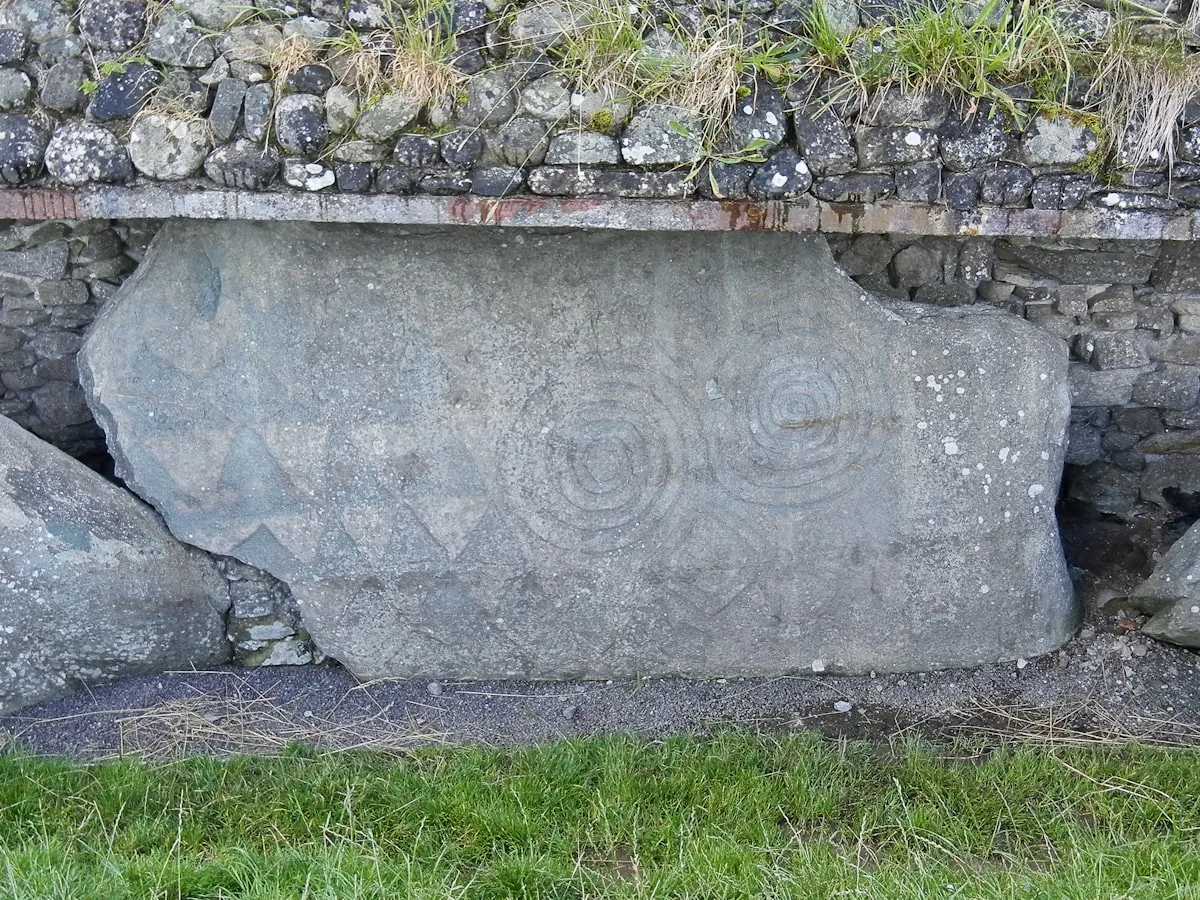

What Is Irish Mythology?
Irish mythology is organized into four cycles: the Mythological Cycle (the gods — Tuatha Dé Danann), the Ulster Cycle (warriors — Cú Chulainn), the Fenian Cycle (the Fianna — Fionn mac Cumhaill), and the Historical Cycle (kings). These stories were preserved in medieval manuscripts including the Book of the Dun Cow and the Book of Leinster.
Irish mythology is not a single story. It is an entire universe — a body of legends, poems, and oral histories spanning over three thousand years, from the pre-Celtic period through the early medieval era. It was carried by poets (filí), who memorized hundreds of tales and recited them at royal courts and community gatherings across Ireland.
What makes Irish mythology distinct from Greek or Norse mythology is its earthliness. The Irish gods are not distant sky-dwellers. They live in Ireland — inside hills, beneath lakes, on islands off the western coast. The landscape itself is mythological. Every river, mountain, and lake in Ireland has a story attached to it, and many of those stories are older than written language.
The myths were eventually written down by Christian monks in the 7th to 12th centuries — scholars who saw these tales as cultural heritage worth preserving, even though they predated Christianity. The monks did not destroy the myths. They recorded them. This is why Irish mythology survived when the oral traditions of many other Celtic peoples did not.
The Four Cycles of Irish Mythology
The Tuatha Dé Danann are the gods of Irish mythology — a supernatural race that ruled Ireland before retreating into the fairy mounds (sídhe). Key gods include the Dagda (the Good God), the Morrigan (goddess of war), Lugh (sun god), Brigid (goddess of healing), and Manannán mac Lir (god of the sea).
Irish mythology is traditionally divided into four great cycles, each centered on a different era and cast of characters.
H3: The Mythological Cycle — The Gods
The Mythological Cycle tells the story of the Tuatha Dé Danann — the People of the Goddess Danu — a race of supernatural beings who arrived in Ireland shrouded in mist. They defeated the previous inhabitants (the Fomorians) at the Battle of Moytura and ruled Ireland as its divine kings and queens.
Key figures in the Mythological Cycle:
- The Dagda — the "Good God." He carried an enormous club that could kill with one end and resurrect with the other. He owned an inexhaustible cauldron of plenty and a magical harp that controlled the seasons.
- The Morrigan — goddess of war, fate, and death. She appeared on battlefields as a crow, and her presence foretold the outcome of the fight. She is not evil — she is inevitable.
- Lugh — the sun god and master of all skills. He led the Tuatha Dé Danann to victory at the Second Battle of Moytura. The festival of Lughnasadh (August) is named for him.
- Brigid — goddess of healing, poetry, and smithcraft. She became St. Brigid in the Christian era, and her feast day (February 1st) is still celebrated as St. Brigid's Day in Ireland.
- Manannán mac Lir — god of the sea. He ruled the Otherworld and ferried the dead to the afterlife across the western ocean.
When the Milesians (ancestors of the modern Irish) arrived, the Tuatha Dé Danann retreated into the sídhe (fairy mounds) — the hills, raths, and passage tombs of Ireland. They became the Aos Sí — the fairy folk — and Irish folklore has remembered them there ever since.
H3: The Ulster Cycle — The Warriors
The Ulster Cycle is set in the north of Ireland and centers on the warriors of Emain Macha (modern-day Navan Fort, County Armagh). Its greatest tale is the Táin Bó Cúailnge (The Cattle Raid of Cooley) — Ireland's equivalent of the Iliad.
The central figure is Cú Chulainn — the Hound of Ulster:
- Born as Sétanta, he earned his name after killing the guard dog of Culann the smith and offering to take the dog's place as guardian
- He was trained in combat by the warrior woman Scáthach on the Isle of Skye
- In the Táin, he single-handedly defended Ulster against the invading army of Queen Medb of Connacht, who wanted to steal the great bull Donn Cúailnge
- He was bound by a geas (a sacred oath) — and his tragic death came when his enemies manipulated his oaths against each other
Other figures: Queen Medb (fierce ruler of Connacht, one of the most powerful women in European mythology), Ferdia (Cú Chulainn's best friend, forced to fight him to the death), and Deirdre of the Sorrows (whose beauty caused a war).
H3: The Fenian Cycle — The Fianna
The Fenian Cycle follows Fionn mac Cumhaill (Finn McCool) and his band of warriors, the Fianna — a roaming army of hunters, poets, and fighters who served the High King of Ireland.
Key stories:
- The Salmon of Knowledge — young Fionn burned his thumb on the salmon that contained all the world's wisdom, and gained infinite knowledge
- The Giant's Causeway — Fionn built a bridge of basalt columns from Ireland to Scotland to fight the Scottish giant Benandonner (the columns are real — they stand in County Antrim to this day)
- Oisín in Tír na nÓg — Fionn's son Oisín fell in love with Niamh of the Golden Hair and traveled to the Land of Eternal Youth. When he returned, centuries had passed. The moment his foot touched Irish soil, he aged instantly.
- Diarmuid and Gráinne — a tale of forbidden love, pursuit, and betrayal that echoes through Irish tradition. Dolmens across Ireland are called "Diarmuid and Gráinne's beds" — the places where the lovers supposedly slept while fleeing Fionn.
The Fenian Cycle is the most popular cycle in Irish oral tradition. Its stories are set in the landscape — every hill, cave, and river in Ireland has a Fianna story attached to it.
H3: The Historical Cycle — The Kings
The Historical Cycle (also called the Cycle of Kings) blends history and myth, telling the stories of Ireland's legendary and semi-historical kings:
- Cormac mac Airt — the wise High King of Tara, associated with the founding of legal institutions
- Brian Boru — the real historical king who united Ireland and defeated the Vikings at the Battle of Clontarf in 1014
- Niall of the Nine Hostages — a 5th-century king whose descendants (the Uí Néill) dominated Ireland for centuries. DNA studies suggest that up to 3 million men alive today carry his Y-chromosome lineage
Creatures of Irish Mythology
The most famous creatures of Irish mythology include the Banshee (a spirit whose wail foretells death), the Pooka (a shapeshifter), the Selkie (a seal that takes human form), and the Leprechaun (a fairy cobbler who guards hidden gold). These beings inhabit a world between the mortal and the divine in Irish folklore.
Irish mythology is inhabited by beings that exist between the mortal and the divine:
- Banshee (Bean Sí) — a spirit woman whose wail foretells a death in the family. She is not a monster — she is a messenger. The banshee is attached to specific Irish families and her cry is an act of mourning, not malice.
- Changeling — a fairy child left in place of a stolen human baby. This belief persisted in rural Ireland well into the 19th century.
- Pooka (Púca) — a shapeshifter, often appearing as a dark horse, goat, or hare. Mischievous rather than malevolent. The Pooka can grant or curse depending on how it is treated.
- Selkie — a seal that can shed its skin and take human form. Selkie stories are common along Ireland's western coast, and they carry deep themes of longing and belonging.
- Leprechaun (Leipreachán) — a fairy cobbler who guards a pot of gold. The modern cartoon image is a 20th-century American invention. The original leprechaun was small, solitary, and not particularly friendly.
- Dullahan — a headless horseman who carries his own head and rides a black coach. When the Dullahan stops, someone dies. He cannot be blocked — gates and doors open for him.
- Merrow (Murúch) — Irish merpeople, particularly mermaids, who live beneath the sea and sometimes fall in love with humans.
Mythology-Inspired Jewelry for Men — Warriors, Symbols & Rings
Irish mythology offers men a deep well of personal symbolism — for tattoos, jewelry, and identity:
Warrior figures that resonate:
- Cú Chulainn — the ultimate warrior, bound by honor, fighting alone against impossible odds. His "warp spasm" battle frenzy is one of the most dramatic scenes in European literature.
- Fionn mac Cumhaill — leader, hunter, strategist. He combined physical strength with the wisdom of the Salmon of Knowledge.
- The Dagda — the "Good God" who was both warrior and provider. His club could kill and resurrect. Strength serving purpose.
In men's Celtic jewelry, mythological themes appear as:
- Celtic warrior shield designs inspired by the Fianna
- Dara Knot rings (strength from mythology's sacred oak)
- Ogham inscriptions of warrior names or Irish words like "Laoch" (hero) and "Neart" (strength)
- Celtic cross rings connecting to the early medieval period when monks preserved these myths
The strongest mythological symbol for men's jewelry is the Celtic warrior shield — directly drawn from the artifacts of the era that produced these legends.
Mythology-Inspired Jewelry for Women — Goddesses, Power & Beauty
Irish mythology features some of the most powerful women in any world mythology — not as supporting characters, but as sovereigns, warriors, and forces of nature:
Powerful female figures:
- The Morrigan — goddess of war and fate. She chose who lived and died in battle. Not evil — sovereign.
- Queen Medb — ruler of Connacht, who started a war to prove her equality with her husband. She led armies and took lovers on her own terms.
- Brigid — the triple goddess of healing, poetry, and the forge. She represents creative and nurturing power. Her feast day (Imbolc, February 1st) marks the beginning of spring.
- Niamh of the Golden Hair — embodiment of beauty and the eternal, who chose Oisín and brought him to the Land of Youth.
- Deirdre of the Sorrows — whose story of love, defiance, and tragedy is one of the great romantic tales of Ireland.
In women's Celtic jewelry, mythology inspires:
- Trinity Knot designs (linked to Brigid's triple aspect)
- Claddagh rings (the enduring love of the Richard Joyce legend)
- Celtic cross pendants with protective symbolism from the Morrigan tradition
- Pieces featuring Tree of Life designs (connecting to the sacred grove tradition)
- Engravings with Irish phrases from mythology: "Mo Ghrá" (my love), "Banríon" (queen)
The Trinity Knot is the strongest mythological symbol for women — directly tied to Brigid, the most beloved figure in Irish spiritual tradition.
Explore More Irish Heritage
- Irish History Guide — The real events behind the myths
- Ogham Alphabet — The writing system that recorded these names
- Irish Language (Gaeilge) — The language these myths were told in
- Celtic Symbols and Meanings — Every symbol explained
- Celtic Symbol for Strength — The warrior tradition continues
- Celtic Symbol for Protection — Shield Knot & Brigid's Cross
- Claddagh Ring Meaning — Love, loyalty & friendship
- ← Back to all guides — The complete Irish heritage hub