
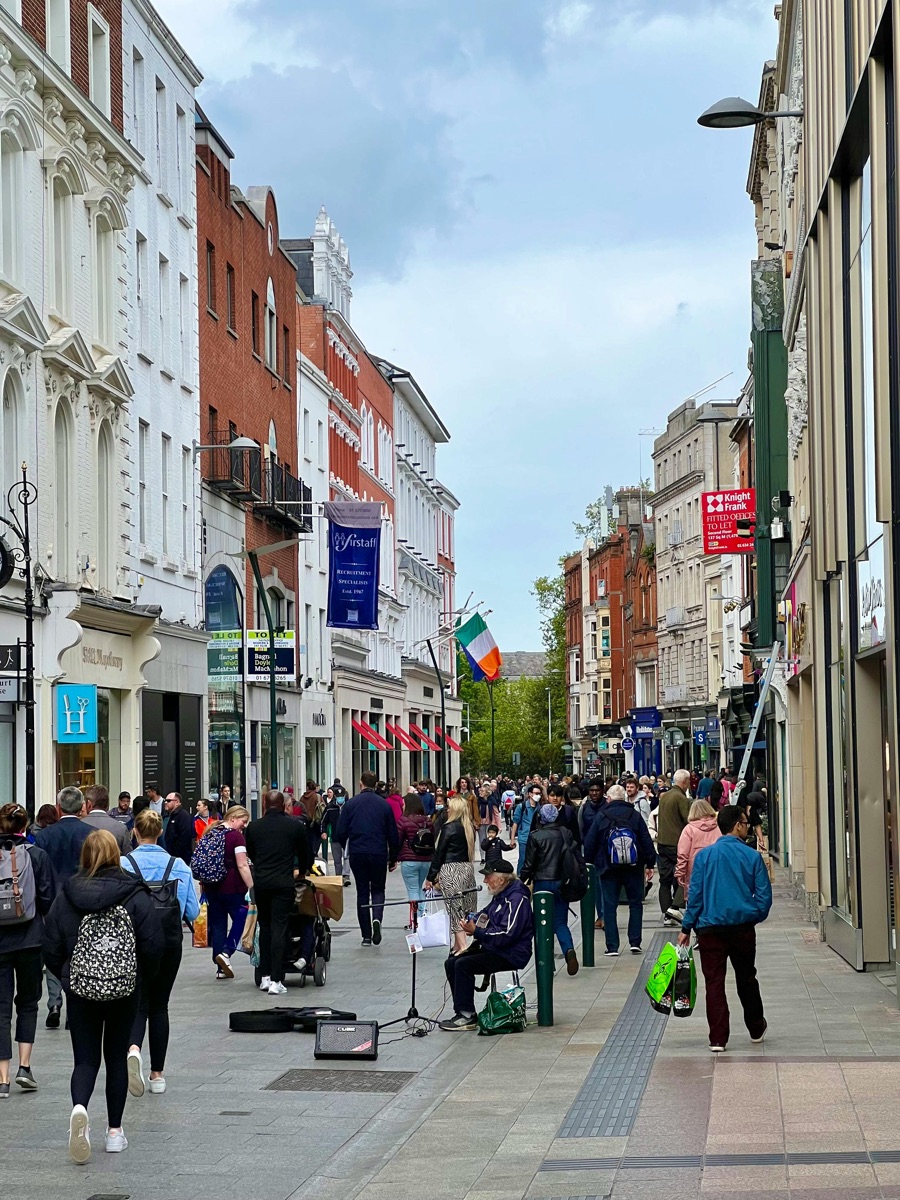

Why is Dublin essential to Irish heritage?
Dublin is where every layer of the Irish past remains visible. It started with the Vikings, whose influence still sits beneath the stone of Dublin Castle. For seven centuries, this castle operated as the nerve center of Irish power, serving as a military fortress and the seat of British rule. Today, it remains an active government complex where the Assay Office has hallmarked gold and silver items starting from 1637. This hallmarking process ensures the authenticity of Irish jewelry, a tradition explored in our complete Irish history guide.
The city also protects the nation's intellectual and spiritual treasures. Trinity College houses the Book of Kells, a 1,200-year-old manuscript that defines Celtic artistry. Walking through the Long Room of the Old Library reveals the depth of Irish scholarly heritage within one of the world's most beautiful libraries.
To understand the birth of the modern Republic, you must visit Kilmainham Gaol. This massive stone structure opened in 1796 and witnessed the most tragic and heroic chapters of the independence struggle. It held leaders from the 1798 rebellion through the 1916 Easter Rising, serving as a monument to Irish nationalism. From its medieval foundations to its revolutionary landmarks, Dublin is the essential repository of the Irish identity.
What are the must-see heritage sites in Dublin?
Dublin's essential heritage sites are Dublin Castle, Trinity College with the Book of Kells, Kilmainham Gaol, the National Museum of Ireland (Archaeology), Christ Church Cathedral, and Glasnevin Cemetery. These landmarks preserve the Irish story, ranging from ancient gold treasures and medieval manuscripts to the physical sites where leaders fought for national independence.
Dublin Castle
Dublin Castle sits at the center of the city's political history. Starting in 1204, it functioned as the administrative hub for English and British rule in Ireland for 700 years. Today, it remains an active government complex and the home of the Assay Office, which has hallmarked gold and silver items starting in 1637. This process guarantees the authenticity of Irish jewelry, a topic explained in our guide to the Dublin Castle hallmark.
Trinity College & the Book of Kells
Trinity College protects the Book of Kells, a 1,200-year-old manuscript that showcases the peak of Celtic artistry. Visitors enter the Long Room of the Old Library, which acts as a vital intellectual center and preserves a massive collection of historic books. This space defines the scholarly tradition of the nation — explore our full Book of Kells guide.
Kilmainham Gaol
Kilmainham Gaol is a massive stone monument to Irish nationalism. It opened in 1796 and witnessed the most heroic and tragic moments in the country's emergence as a modern nation. Leaders from the 1798 rebellion to the 1916 Easter Rising were held within its walls before it shut down as a prison in 1924.
National Museum of Ireland — Archaeology
The National Museum of Ireland on Kildare Street is the primary repository for ancient artifacts. Its collection includes over two million objects that track the development of Irish civilization from prehistoric times through the Middle Ages. Here, you can see the "Tara" Brooch and eighth-century treasures like the Ardagh Chalice. These artifacts are essential for understanding the country's past, as covered in our Irish history guide.
Christ Church Cathedral
Christ Church Cathedral remains a medieval heart in the city center, standing near the castle from the Viking era onwards.
Glasnevin Cemetery
Glasnevin Cemetery serves as the guardian of the nation's memory, holding the remains of the individuals who shaped Irish independence and identity.
What is the Dublin Castle hallmark and why does it matter?
The Dublin Castle hallmark is a government-regulated stamp that guarantees the purity and authenticity of Irish gold and silver. This system, established in 1637, protects buyers by verifying metal quality through specific symbols. It remains the only legal way to certify that precious metal items are truly from Ireland and meet national standards.
The Dublin Assay Office operates from Dublin Castle to test and mark every piece of Irish precious metal. A full hallmark typically contains several distinct stamps. The maker's mark identifies the specific smith, while the fineness mark confirms the metal's purity. A crowned harp indicates 22ct gold or sterling silver. In 1638, the office added a date letter that changes annually to record when the piece was struck. The Hibernia mark, added in 1730, now serves as the official symbol of the Dublin office for all items. For anyone purchasing Irish jewelry, these marks are essential. They provide an absolute guarantee of quality that prevents fraud in the precious metals trade. Understanding why the Dublin Castle hallmark matters helps collectors and travelers identify authentic pieces that carry the weight of centuries.
How does Dublin connect to Celtic art and the Book of Kells?
Dublin is the ancestral home of Celtic artistic expression, centered at Trinity College. The city preserves the Book of Kells, a 1,200-year-old manuscript that serves as the foundation for Irish visual identity. This masterpiece of intricate knotwork and religious symbolism continues to inspire modern Irish design and jewelry today.
The connection between Dublin and Celtic art lives within the walls of Trinity College. Here, the Old Library protects the Book of Kells — a medieval manuscript that represents the peak of illuminated artistry. Walking through the Long Room, known as Ireland's front room, you see the massive intellectual weight this city carries.
The manuscript itself is a masterclass in Celtic knotwork and symbolism. Staff turn the pages several times a year for conservation, allowing different glimpses of the Gospel of Mark. Every folio features dense, swirling patterns and interlaced designs that require a close-up look to fully appreciate. These ancient symbols are the DNA of Irish aesthetic history. This tradition flows directly into modern Irish jewelry and visual arts. Contemporary designers still look to these pages for the complex geometry found in traditional motifs. By preserving these folios, Dublin ensures that the artistic language of the eighth century remains a living part of the Irish soul. Explore our full Book of Kells guide to see how these ancient lines define modern style.
What should you eat and drink in Dublin?
Dublin's culinary heritage centers on iconic exports and comforting traditional fare. You must experience a pint at the Guinness Storehouse and a tasting at the Jameson Bow Street Distillery. Beyond the glass, essential dishes include savory Irish stew, Dublin coddle, and hearty soda bread, all best enjoyed within the social atmosphere of the Temple Bar district.
The Guinness Storehouse at St. James's Gate is the spiritual home of Ireland's most famous export. This landmark allows you to see the history and soul of the stout within a massive industrial center. For whiskey enthusiasts, the Jameson Bow Street Distillery remains the heart of Dublin's distilling tradition. These beverages are foundational to Irish pub culture and Irish whiskey heritage, representing a legacy of liquid gold that flows through the city's past.
To feel the pulse of the city, visit the Temple Bar area. This district serves as the social heart of Dublin, where the energy is as vibrant as the street music. Food here is about endurance and local identity. Traditional Irish stew uses authentic ingredients like lamb and root vegetables to create a flavor that feels like a warm embrace on a rainy day. Dublin coddle is a specific city favorite, a slow-simmered pot of sausages, bacon, and potatoes that sustained families through the decades. Pair these with traditional soda bread, a dense staple that has occupied the Irish table for centuries. Walking through these streets, you realize that the culinary landscape is as much a part of the heritage as the stone walls of the castle. These flavors define the Dublin experience, connecting you to the practical, everyday heritage of the nation through every bite and glass.