
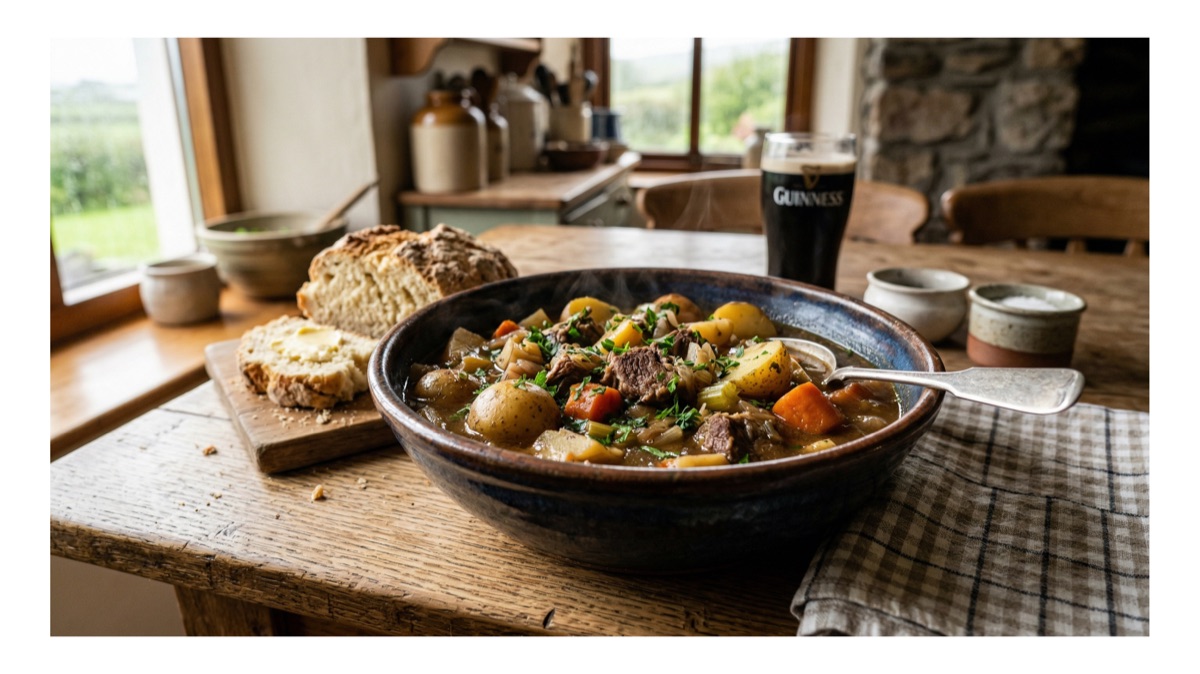

What Is Irish Stew?
Irish stew is a slow-cooked one-pot dish of meat, potatoes, and onions. It's the national dish. There's argument about what goes into it — there always has been — but the bones of it are simple: tough meat, starchy potatoes, and enough time for the pot to do its work.
The original meat was mutton, not lamb. Sheep were kept for wool and milk in Ireland, so only older animals that had outlived their economic use ended up in the stew pot. These were tough, sinewy animals — they needed hours of slow cooking to become tender. That long simmer is the entire point. You don't rush Irish stew.
Some food historians believe goat was actually the first meat used before mutton took over. Either way, the stew was poor-man's food: cheap cuts, root vegetables, and water. No wine, no stock cubes, no herbs flown in from somewhere else.
Traditional Irish Stew (Mutton or Lamb)
The purist version. If you can find mutton (neck chops or shoulder), use it. The flavour is stronger than lamb and it holds up to the long cooking. If you can't, lamb shoulder or neck works well enough.
Ingredients
- 1 kg (2.2 lb) mutton or lamb neck chops, bone in — the bone adds body to the broth
- 1 kg (2.2 lb) floury potatoes, peeled and thickly sliced — Roosters or Kerr's Pinks if you can get them
- 3 large onions, thickly sliced
- Water — enough to just cover the meat
- Salt and black pepper
- Fresh parsley, chopped (for serving — optional, and the only herb traditionally added)
Method
- Layer the meat, potatoes, and onions in a heavy pot or Dutch oven. Alternate: meat, potatoes, onions, meat, potatoes, onions. Season each layer with salt and pepper.
- Pour in enough cold water to barely cover the top layer. Don't drown it — the potatoes will release starch and thicken the broth naturally.
- Bring to a gentle simmer. Cover with a tight lid.
- Cook on the lowest heat for 2½ to 3 hours. Don't stir — stirring breaks the potatoes. Check occasionally that it's not catching on the bottom. Add a splash of water if it gets too thick.
- The stew is done when the meat falls from the bone and the potatoes have half-dissolved into the broth. Taste for salt. Serve in deep bowls with thick-cut bread — soda bread, ideally.
Prep time: 15 minutes | Cook time: 3 hours | Serves: 6
What NOT to Add (According to Purists)
Traditionalists argue that carrots, turnips, pearl barley, and Worcestershire sauce have no place in Irish stew. The argument goes that these additions mask the flavour of the meat and turn the stew into something generic. It's a position. Whether you agree depends on how strict you are about these things.
Guinness Beef Stew
This is the modern variation — and the one most people outside Ireland think of when they hear "Irish stew." It uses beef instead of mutton and adds Guinness stout to the broth. The stout gives the sauce a deep, almost chocolatey bitterness that works well with the beef.
It's not traditional. It's not old. But it's good.
Ingredients
- 1 kg (2.2 lb) beef chuck or shin, cut into large chunks
- 2 tablespoons flour, seasoned with salt and pepper
- 2 tablespoons butter or oil
- 2 large onions, roughly chopped
- 3 carrots, peeled and cut into thick rounds
- 3 sticks celery, chopped
- 2 cloves garlic, sliced
- 2 tablespoons tomato paste
- 440 ml (1 can) Guinness stout — or any dry stout
- 500 ml (2 cups) beef stock
- 2 bay leaves
- 1 sprig thyme
- 800 g (1.7 lb) potatoes, peeled and halved
- Salt and pepper
Method
- Toss the beef in the seasoned flour. Brown in batches in a heavy pot with the butter — don't crowd the pan. Set the browned meat aside.
- In the same pot, soften the onions, carrots, and celery for 5 minutes. Add the garlic and tomato paste. Cook for another minute.
- Pour in the Guinness and scrape the bottom of the pot to lift the browned bits. Let it bubble for 2 minutes.
- Return the beef to the pot. Add the stock, bay leaves, and thyme. Bring to a simmer.
- Cover and cook on low heat for 1½ hours.
- Add the potatoes. Cook for another 45 minutes to 1 hour until the potatoes are tender and the beef breaks apart easily.
- Remove the bay leaves and thyme. Taste for seasoning. Serve with crusty bread.
Prep time: 20 minutes | Cook time: 2½ hours | Serves: 6
Lamb and Root Vegetable Stew
A middle ground between the strict traditional version and the Guinness stew. This is closer to what most Irish families actually cook on a Wednesday evening in January.
Ingredients
- 800 g lamb shoulder, bone-in pieces
- 4 medium potatoes, quartered
- 2 carrots, chunked
- 1 turnip or 2 parsnips, chunked
- 2 onions, quartered
- 1 litre water or light lamb stock
- Salt, pepper, a few sprigs of thyme
Method
Brown the lamb pieces briefly. Layer everything in the pot — meat, root vegetables, potatoes, onions. Cover with water or stock. Simmer covered for 2–2½ hours. The carrots and turnip add sweetness; the potatoes thicken the broth. A handful of chopped parsley on top when you serve it.
The History in the Pot
Irish stew was first recorded in writing around 1800, though it had been made for long before that. The dish reflects Irish agricultural reality: sheep were everywhere, potatoes were the staple crop, and onions grew in every garden. The combination required no special equipment — just a single cast-iron pot hung over the fire.
After the Famine, beef became more available and eventually displaced mutton in many households. The Guinness version came later still, probably in the mid-twentieth century as the stout brand became an emblem of Irish identity abroad.
Today, Irish stew appears on pub menus from Galway to Dublin to New York. The best versions still come from farmhouse kitchens where someone has the patience to let a pot of mutton and potatoes do its work for three hours without lifting the lid.
Where to Try It in Ireland
- Galway: Ard Bia at Nimmos — lamb stew with brown bread
- Dublin: The Brazen Head (est. 1198) — claims to be Ireland's oldest pub, serves a reliable beef and Guinness stew
- Cork: The English Market — several stalls serve hot stew at lunchtime
- Anywhere with a pub and a fire — Irish stew is pub food; you'll find it on the daily specials board across the country, especially from October through March
Sources: Wikipedia (Irish stew, Irish cuisine); NotebookLM research; Darina Allen's Irish Traditional Cooking references.